

Overview
Selecting the right textile manufacturing partner is a strategic decision that directly impacts product quality, brand consistency, and operational efficiency. This guide outlines the key criteria B2B buyers should evaluate to reduce risk, ensure compliance, and build long-term partnerships.

Why partner selection matters
In today’s competitive global market, a manufacturer is not just a supplier: it is an extension of your brand.
A poor choice can lead to:
- Quality inconsistency
- Delivery delays
- Compliance issues
- Reputational risk
The right partner enables:
- Scalability
- Continuous innovation
- Market differentiation

a. Why partner selection matters
In today’s competitive global market, a manufacturer is not just a supplier: it is an extension of your brand.
A poor choice can lead to:
- Quality inconsistency
- Delivery delays
- Compliance issues
- Reputational risk
The right partner enables:
- Scalability
- Continuous innovation
- Market differentiation
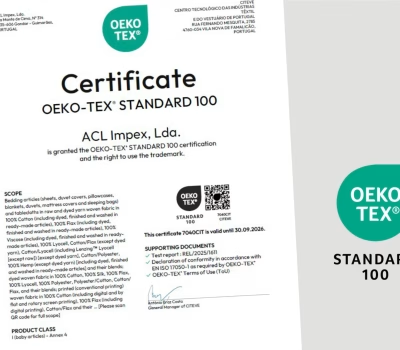
b.Certifications and compliance
Critical for demanding markets (U.S., Europe).
Key certifications:
- OEKO-TEX® Standard 100
- GOTS (organic cotton)
- BSCI / SMETA (social compliance)
These indicate:
- Absence of harmful substances
- Traceability
- Responsible practices
c. Quality control systems
Key questions:
- Are there checkpoints throughout production?
- Is final inspection systematic?
- Are reports documented?
A reliable partner ensures:
- Batch consistency
- Low defect rates
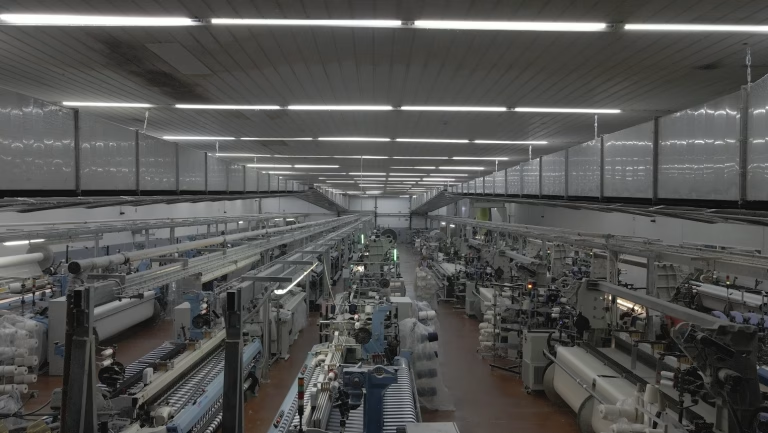
d. Production capacity and flexibility
Evaluate:
- MOQ (minimum order quantities)
- Lead times
- Ability to scale
Ideal balance:
- Strong industrial structure
- Flexibility for dynamic collections
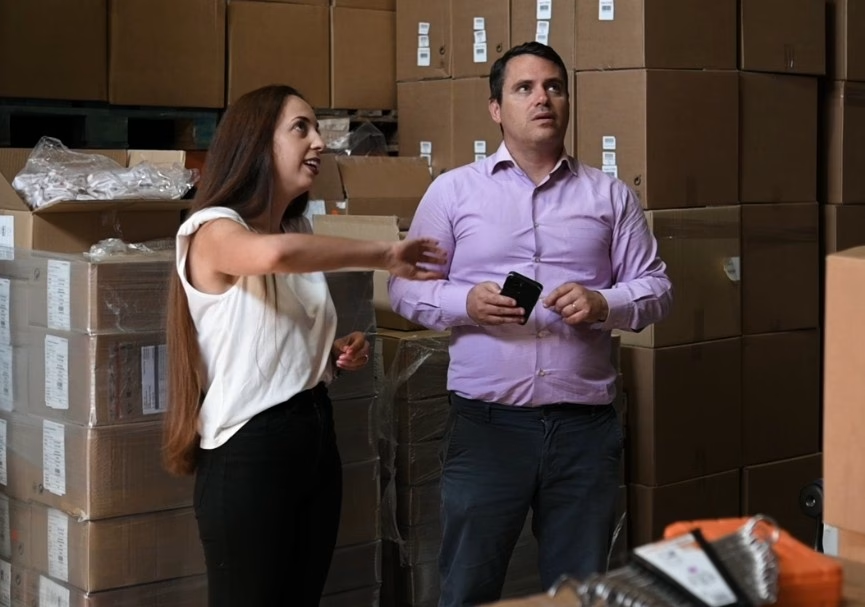
e. Transparency and communication
Essential in international B2B relationships.
Look for:
- Fast, clear responses
- Problem anticipation
- Proactive communication
[Inference] Strong communication is typically associated with long-term successful partnerships.
f. Sustainability and traceability
Increasingly decisive, especially in premium markets.
Check:
- Raw material sourcing
- Low-impact processes
- Full supply chain traceability
g. Location and logistics
Manufacturing location affects:
- Transport costs
- Lead times
- Customs complexity
Example:
- European production: proximity and control
- Asian production: potential cost advantage, higher complexity

h. Development and innovation capability
Beyond production, a strong partner should support:
- Product development
- Technical input
- Continuous improvement
Conclusion
Choosing a textile manufacturing partner should not be price-driven alone.
Key success factors include:
- Consistent quality
- Certifications and compliance
- Technical expertise
- Communication
- Sustainability
In practice, the best results come from strategic partnerships rather than transactional relationships.
ACL Impex combines experience, certifications, and technical expertise to support premium bedding collections, ensuring traceability, compliance, and consistent quality across the entire production chain.