Overview
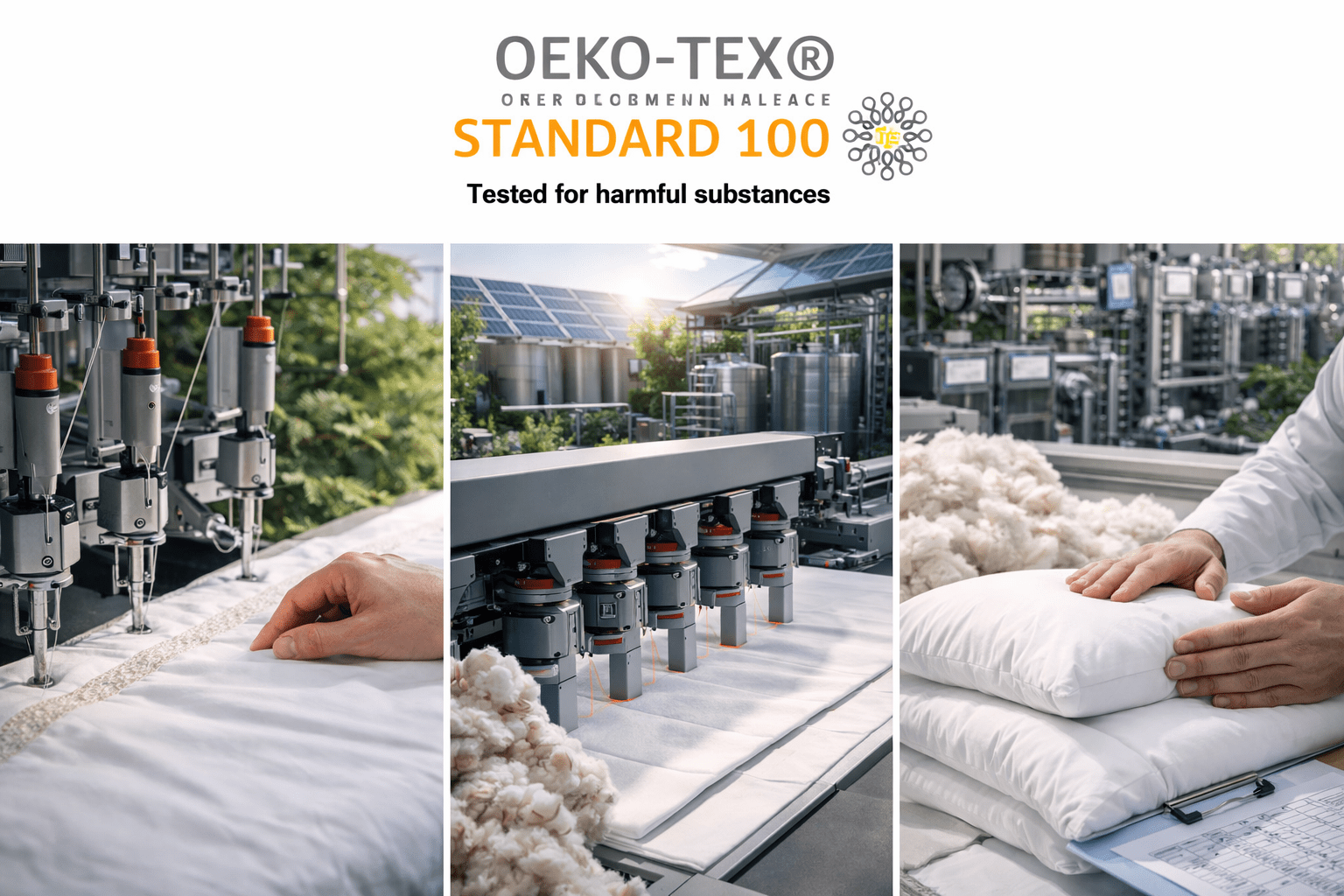
Product safety has become a critical factor in the selection of bedding products. Among the most recognized international certifications, OEKO-TEX® Standard 100 stands out as a benchmark for textile safety, ensuring that materials have been tested for substances that could be harmful to human health.
In the bedding industry, this certification confirms that fabrics, yarns, dyes, and accessories have been evaluated under strict criteria, helping ensure that the final product is safe for direct skin contact. For retailers, professional buyers, and brands, OEKO-TEX® Standard 100 has become an important signal of quality, transparency, and responsibility within the textile supply chain.
This article explains what OEKO-TEX® Standard 100 is, how the certification process works, and why it has become increasingly relevant in the global bedding market.

What is OEKO-TEX® Standard 100
OEKO-TEX® Standard 100 is an international certification that tests textile products for the presence of harmful substances.
The certification can apply to almost every component of a textile product, including:
- fabrics
- yarns
- sewing threads
- buttons and accessories
- dyes and finishing agents
- semi-finished and finished textile products
To obtain certification, every component of the product must comply with OEKO-TEX® limits.
Why it matters for bedding
Bedding products remain in direct contact with the skin for many hours every night, which makes chemical safety particularly relevant.
Testing under OEKO-TEX® Standard 100 evaluates multiple categories of substances, including:
- banned azo dyes
- heavy metals
- formaldehyde
- pesticides
- plasticizers
- volatile organic compounds
The list includes several hundred regulated or monitored substances.
OEKO-TEX® product classes
The certification system divides textile products into four product classes, depending on the level of skin contact.
Class I
Products for babies and toddlers up to 3 years old. This category has the strictest limits.
Class II
Products with direct skin contact, such as underwear, shirts, and bedding.
Class III
Products without direct skin contact, such as jackets.
Class IV
Decorative materials such as curtains and upholstery fabrics.
In most cases, bed sheets, pillowcases, and duvet covers fall under Class II.
Certification process
To obtain OEKO-TEX® certification, textile products are tested by independent institutes authorized by the OEKO-TEX® Association.
The process typically includes:
- laboratory testing of materials and components
- documentation review of the supply chain
- compliance verification with OEKO-TEX® limits
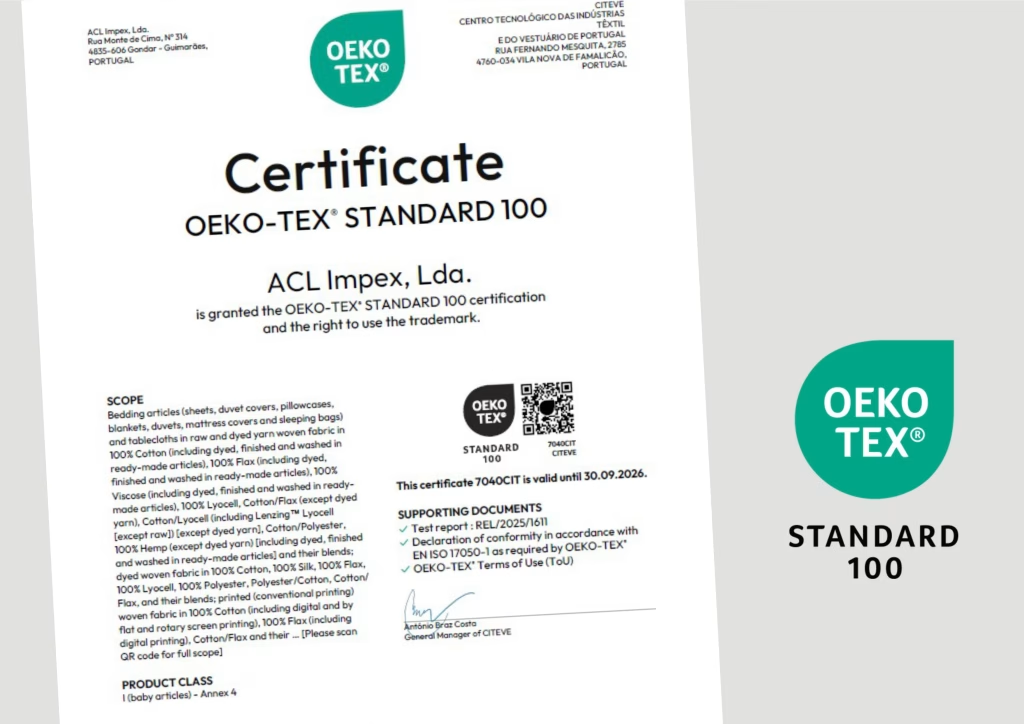
- issuance of a certificate with a traceable identification number
Certificates generally require periodic renewal.
Market value of OEKO-TEX® certification
For retailers, brands, and B2B buyers, OEKO-TEX® certification has become a widely recognized indicator of textile safety and transparency.
Key benefits include:
- increased consumer trust
- easier compliance with market requirements
- competitive differentiation
- improved supply-chain transparency
In a market increasingly focused on product safety and responsible sourcing, certifications play an important role in building credibility.
OEKO-TEX® vs organic certifications
It is important to distinguish OEKO-TEX® Standard 100 from organic textile certifications such as GOTS.
OEKO-TEX® focuses primarily on testing the finished product for harmful substances, while other certifications evaluate agricultural practices and environmental criteria across the supply chain.
Many premium textile products combine multiple certifications to address different aspects of sustainability and safety.
Conclusion
In the premium bedding sector, consumer trust increasingly depends on transparency and independent verification of materials and processes.
Certifications such as OEKO-TEX® Standard 100 provide reassurance that textile products meet strict safety requirements, offering confidence to both consumers and professional buyers.
Manufacturers with experience in certified textile production are better positioned to ensure traceability, compliance, and consistent product quality in international markets.