
Overview
Understanding the fundamentals of luxury bedding for retail buyers
In the global home-textile market, the terms premium bedding and luxury bedding are widely used, yet their meaning can vary significantly depending on the brand, the market segment, and the expectations of the consumer.
For retail buyers and interior professionals, distinguishing between true high quality bedding and products that simply carry a luxury label requires a deeper understanding of materials, manufacturing quality, and overall product consistency.
Premium bedding is rarely defined by a single characteristic. Instead, it results from the combination of several factors: raw material quality, yarn selection, weaving technology, finishing processes, durability, and tactile experience. When these elements are aligned, the final product offers not only visual elegance but also long-term performance and comfort.
Understanding these fundamentals allows buyers to build collections that justify their positioning in the luxury bed sheets and premium bedding segments.

The importance of raw materials
At the foundation of every premium bedding product lies the quality of the fibre used in its production. Among the most widely recognized materials in high-end bedding are:
- Long-staple and extra-long-staple cotton (ELS)
- Long Island cotton™
- Egyptian cotton™
- Supima cotton™
- European linen
- Silk
- TENCEL™ lyocell
These fibres are valued because of their length, strength, and uniformity, which allow spinners to produce finer yarns. Finer yarns, in turn, enable smoother fabrics with greater durability and a more refined hand feel.
In many luxury bedding collections, long-staple cotton varieties are preferred because they reduce pilling and contribute to a smoother, more durable fabric surface.
However, fibre origin alone does not define a premium product. The way the yarn is spun, woven, and finished is equally important.
Yarn quality and fabric construction
One of the most misunderstood aspects of luxury bedding is the role of thread count. While thread count is frequently used as a marketing metric, it does not automatically guarantee quality.
In reality, yarn quality and fabric construction are far more significant indicators.
Premium bedding fabrics often feature:
- Fine yarn counts that create lighter and smoother fabrics
- High precision weaving
Two of the most common constructions in luxury bed sheets are:
Percale
A plain weave structure known for its crisp feel, breathability, and matte appearance. Percale bedding is particularly appreciated in warmer climates or by sleepers who prefer a fresh and lightweight sensation.
Sateen
A satin weave that creates a smoother and slightly more lustrous surface. Sateen fabrics are often chosen for their softer drape and silky touch.
Note: How to distinguish percale from sateen: in percale both sides of the fabric are identical. In sateen, the two sides are different: the face has a slight sheen, while the reverse does not.
Jacquard
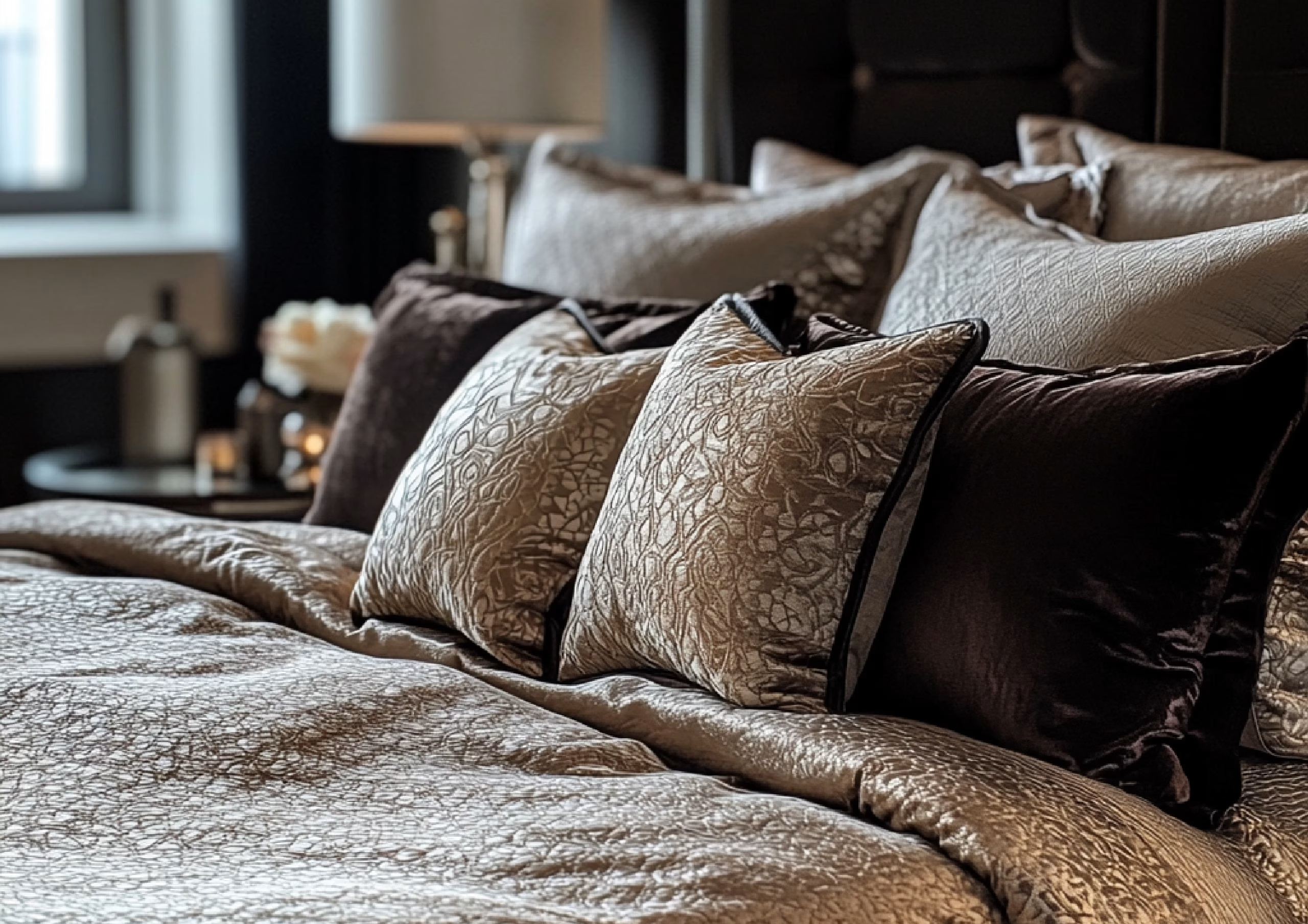
A textile construction created using a jacquard loom that allows patterns to be formed directly within the structure of the fabric, rather than being printed or embroidered afterwards. Jacquard fabrics are distinguished by their integrated patterns, often with a subtle relief, and are frequently chosen for their visual richness, depth of texture, and sophisticated appearance.
Finishing Processes and Tactile Experience
Finishing processes play a decisive role in how bedding looks and performs over time. After weaving, fabrics typically undergo several treatments designed to improve softness, durability, and dimensional stability.
These processes may include:
- Singeing, aimed at removing short fibers from the surface of the fabric
- Alkaline scouring, which acts on the outer layers of cotton fibers (cuticle and primary wall) to remove natural fats, gums, waxes, and other impurities
- Bleaching, through which the naturally slightly yellowish tone of cotton is brought to a clean white
- Mercerization, which causes cotton fibers to swell and reorganizes the cellulose structure, making the fiber surface smoother and more regular. As a result, dye absorption improves, fiber strength increases, the hand feel becomes smoother, and a more pronounced natural luster is achieved due to better fiber alignment and light reflection
- Enzyme washing, which removes loose surface fibers
- Stentering, which sets the fabric to the desired width, stabilizes the structure, and can apply specific softening treatments
- Sanforization, which helps achieve controlled shrinkage in the length direction
- Additional softening treatments, depending on the desired final hand feel.
Durability and long-term performance
Consumers purchasing high quality bedding expect products that maintain their appearance and comfort over time.
Durability depends on several factors:
- fibre quality
- yarn strength
- weaving precision
- finishing treatments
- quality control during manufacturing
High-quality fabrics tend to retain their structure, colour, and softness even after repeated washing cycles. This long-term performance is one of the most important differentiators between high quality bedding and lower-grade alternatives.
Development considerations for retail buyers
When developing or sourcing a premium bedding collection, buyers should evaluate several key factors:
Material sourcing
Confirm fibre origin and fibre quality. Transparency in sourcing helps ensure product credibility and consistency.
Manufacturing expertise
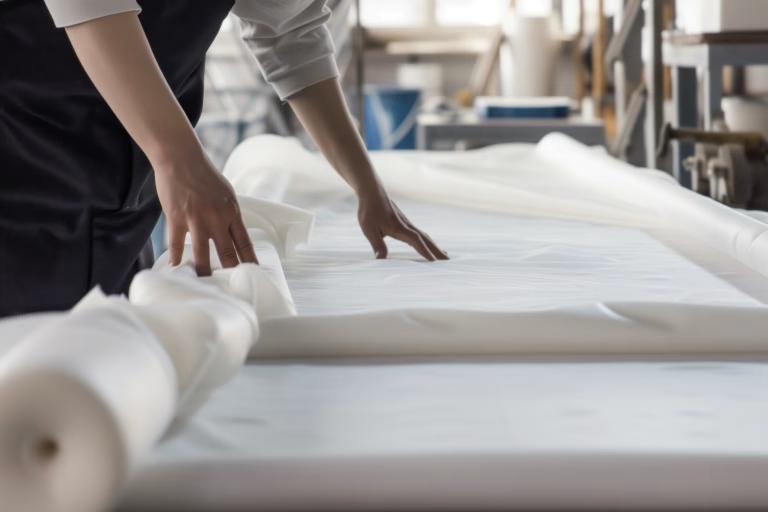
Producers with strong technical knowledge of weaving, finishing, and textile engineering are better positioned to deliver consistent quality.
Product consistency
Consistency across different production batches is essential for retailers managing long-term collections.
Design capability
Premium bedding often requires sophisticated finishing techniques and decorative elements that demand experienced manufacturing teams.
Supply chain reliability
Reliable partners help ensure stable lead times and dependable product quality.

Conclusion
In the premium bedding segment, luxury is not defined by a single attribute. It emerges from the combination of high-quality fibres, refined yarns, precise weaving, thoughtful finishing, and careful craftsmanship.
For retailers and brands aiming to position themselves in the luxury bedding and premium bedding market, understanding these technical and aesthetic factors is fundamental. A product that successfully integrates these elements delivers not only visual sophistication but also the comfort, durability, and tactile experience that discerning consumers expect.
Companies with strong textile expertise, transparent sourcing, and consistent manufacturing processes are therefore essential partners in the development of truly great bedding collections.
With extensive experience in the production of premium bedding, ACL Impex combines technical textile know-how, certified materials, and refined manufacturing processes to support brands and retailers in developing bedding collections that meet the expectations of the luxury segment.